

Grade is a promise. We would rather make a smaller one and keep it.
Most disputes in this trade are not about fraud — they are about two parties using the same word to mean different things. Everything below exists so that 'veneer grade' means the same thing in our yard as it does in your mill.
How American hardwood veneer logs are graded
Veneer log grade is set by the number of clear faces a log presents. AAA / Prime means four clear faces with exceptional diameter and colour — face-veneer material, and always a small share of any parcel. AA means three clear faces with minor permissible defect on the fourth, and is the commercial backbone of most veneer contracts. A means two to three clear faces, suited to rotary peeling, backing veneer and panel cores. No.1 sawlog sits below veneer grade and is quoted separately rather than mixed in to inflate volume.
Against every tier the same defect criteria apply: sweep no greater than 1" per 8 feet of length, no heart rot, shake or ring failure, clear faces with sound pin knots only, minor end checks with ends sealed at the yard, no metal, and mineral streak within limits. Grading and scaling happen inland at the concentration yard, where each log is numbered and recorded — never at the quay after loading.
What we mean by veneer grade.
A veneer log has to give a slicer long, clean, uninterrupted face. That is a much narrower window than 'a good-looking log', and the criteria are unforgiving.
AAA / Prime
Four clear faces, exceptional diameter and colour. The logs a slicing mill wants for face veneer. A small share of any parcel — we do not pretend otherwise.
AA
Three clear faces with minor permissible defect on the fourth. The commercial backbone of most veneer contracts.
A
Two to three clear faces. Suited to rotary peeling, backing veneer and panel cores where yield matters more than face figure.
No.1 Sawlog
Below veneer grade but sound and straight. Quoted separately — never mixed into a veneer parcel to inflate volume.
Defect criteria applied
| Straightness | Max 1" sweep per 8' of length |
|---|---|
| Soundness | No heart rot, shake or ring failure |
| Knots | Clear faces; sound pin knots only |
| End checks | Minor only; ends sealed at the yard |
| Metal | Detected and rejected before shipment |
| Stain | No sticker stain, mineral streak within limits |
| Colour | Matched within a lot where specified |
| Freshness | Cut-to-load window controlled by season |
Tighter or looser tolerances can be contracted. What we will not do is agree to a tolerance verbally and grade to a different one.
Four points where a log can be rejected.
Every one of them is inland. Rejecting a log at the landing costs a few dollars; rejecting it at the destination port costs a relationship.
At the source
Logs are assessed at the landing or mill yard against your written specification. Anything obviously outside spec never enters the parcel.
At the concentration yard
Each log is scaled, graded, numbered and end-sealed. Diameter, length, grade and volume are recorded against its number.
Tally & photographs
You receive the piece-by-piece tally and photographs of the parcel before loading is booked. Approval happens on paper, at a distance, before money moves.
Independent survey
Where you want it, SGS, Bureau Veritas or your own nominated surveyor attends loading at your cost, and their tally governs.
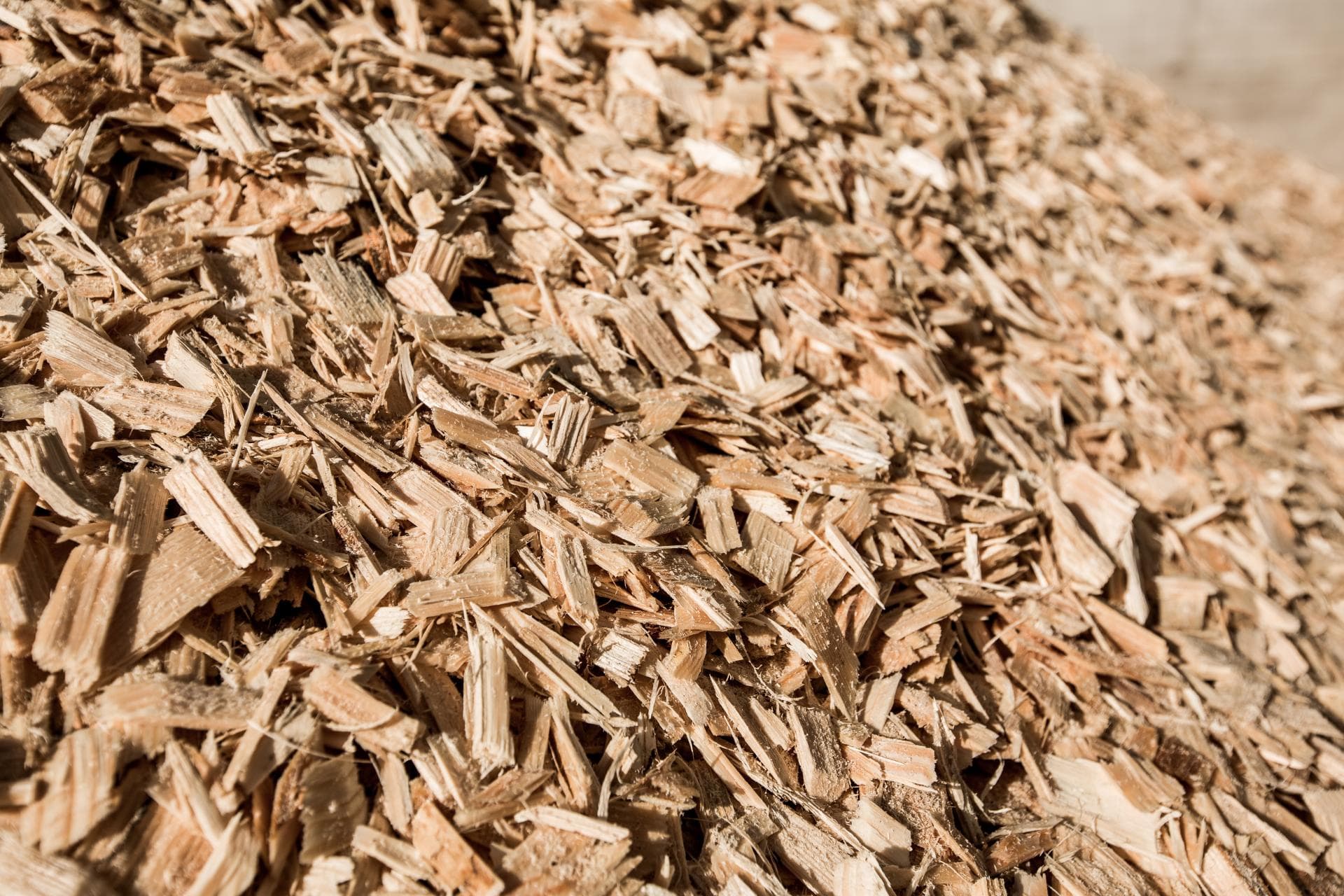
For chips, the whole argument is screening.
A panel mill's refiner is tuned for a fraction band. Send it fines and you waste energy and lose yield; send it oversize and you blunt plates and stall throughput. Bark drives up ash and shows up in the board face.
- Screened at source — fines and oversize removed before loading, not after arrival
- Bark held below 1 % by controlling debarking upstream, not by dilution
- Moisture measured and declared per cargo, green or dried to your spec
- Loading area kept clear of soil, stone and metal contamination
- Retained samples held against every shipment for reference
What buyers ask about grade, inspection and certification.
How are American hardwood veneer logs graded?
Logs are graded on the number of clear faces, then checked against defect criteria covering straightness, soundness, knots, end checks, metal, stain, colour and freshness. Grading happens at the concentration yard where each log is scaled, numbered and end-sealed, not at the quay after loading.
What does AAA or Prime grade mean for a veneer log?
AAA / Prime means four clear faces with exceptional diameter and colour — the logs a slicing mill wants for face veneer, and always a small share of any parcel. AA means three clear faces with minor permissible defect on the fourth. A means two to three clear faces, suited to rotary peeling and panel cores.
Can a buyer appoint an independent surveyor?
Yes. SGS, Bureau Veritas or your own nominated surveyor can attend loading at your cost, and their tally governs. Independent survey sits on top of our own inspection chain, which already rejects material at the landing, at the concentration yard and at tally stage.
Is Silvestryn's hardwood FSC or PEFC certified?
FSC or PEFC certified material can be sourced where your contract requires it, and certified parcels are kept and documented separately from non-certified ones. Certification is confirmed per contract and per parcel — we do not present it as a blanket company claim, because certification attaches to material and chain of custody, not to a letterhead.
How are quality claims handled on arrival?
Notify us on discharge with photographs and, where relevant, a surveyor's report. Because every parcel is tallied and photographed before loading, both sides compare the same cargo against the same record. Claims are settled on that evidence rather than argued from memory.
What legality documentation comes with US hardwood?
Every export carries a US Lacey Act declaration naming species and harvest state, and our supplier agreements require the same evidence upstream. EU-bound cargo additionally carries geolocation of the harvest area, legality evidence and a due-diligence statement reference under the EUDR.
Claims are handled on evidence, quickly.
Notify us on discharge with photographs and, where relevant, a surveyor's report. Because every parcel is tallied and photographed before loading, both sides are comparing the same cargo against the same record — which is the only way a claim gets resolved instead of argued.